05 September 2018

The shipbreaking industry where workers die on the shores of Bangladesh


 (Photo: Shutterstock)
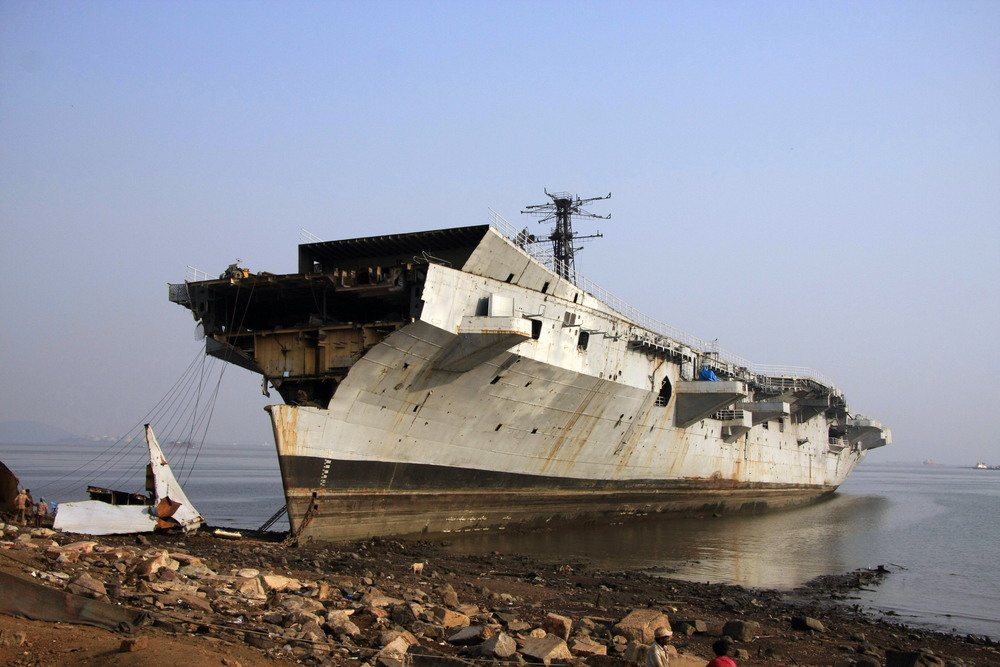
This year, falling freight rates have led many shipping lines to send their old oil tankers to an early grave - to the South Asian shipbreaking yards where they are torn down over a matter of weeks and end up as a scrap pile. On the shores of Bangladesh, which hosts the world’s largest ship recycling industry, shipbreaking is often seen as the work of hired hands from the poorest sections of the Bangla society.


“Shipbreaking started in Bangladesh in the 1960s. It happened when local people saw that breaking ships was a bit profitable, and they started getting financing for the job - there was no environmental or workers’ safety concern at that time,” said Mohammed Ali Shahin, program officer of NGO Shipbreaking Platform in Bangladesh. “From 2000, NGOs like us and the media are concerned about the issue.”

The problems facing the community indulged in the trade is alarming. The shipbreaking industry witnesses several violations in its daily operations including environmental pollution, dearth of safety regulations and accidents caused due to it, worker exploitation, and inadequate waste management facilities.

The daily laborers on the shore are predominantly people hailing from the northern part of Bangladesh, who move down south in search of jobs and a better living. “These workers come from poverty-stricken areas, and don’t have any chance of generating income in their villages. The shipbreaking industry is easy to get a job in, as it does not need any training or certificate - you just go there, and if you have a person to contact, you can join in,” said Shahin.

The people who control the trade are influential people in Bangladesh, and in the absence of regulations and compliance mechanisms in the industry, turn a blind eye to the plight of workers. This resulted in various accidents over the years, till NGOs started intervening in and advocated for safety regulations in the trade, bringing national and international attention to the industry.

“In 2009, the Bangladeshi court gave a judgment that all ships coming to the yard should be pre-cleaned of all the debris on-board. Since 2012, the shipbreaking industry is being regulated by the Bangladesh Ministry of Industry,” said Shahin.

Though conditions have considerably improved, Shahin felt that a lot more could be done to improve the working conditions of laborers. “Accidents are still happening, and 14 workers have already died this year. Workers are still working without safety equipment in most of the yards,” he said. However, Shahin is quick to add that a few yards are actively looking to improve the situation, by getting certified through national governing bodies for being compliant with the existing standards.

“As an NGO, we help the workers by educating them on the risks involved and their basic rights as workers. We also communicate with the owners and try helping the government to improve the situation by creating a comprehensive approach to upgrading shipbreaking yards,” he said.

The International Maritime Organization (IMO) and UN Environmental Programme (UNEP) have initiated laws like the Hong Kong convention that provides guidelines on ship recycling and regulations on how the ships need to be sent into the yard. To an extent, the ships coming into the Bangladeshi shore accentuate the environmental and workers’ health crisis.

“Ships coming in from Europe bring in a lot of waste. We try to raise the issue that it is not our waste and that EU shipping companies should be responsible for that,” said Shahin. “We send the message that the EU countries and their shipping companies should contribute to the development of the shipbreaking industry by bringing waste management facilities and also ensuring safe recycling of their ships that come into Bangladesh.”

Apart from Bangladesh, countries like India, Pakistan, and China also process ship scrap, but Beijing is now looking to stop further activities in ship recycling - in accordance with its new environmental protection laws. China currently breaks down around 2.5 million tonnes of shipping scrap every year, and it leaving the market would put additional pressure on the Indian subcontinent.

The 2020 IMO sulfur cap regulation would render many ships unusable, and this could lead to a lot more vessels making their way to the recycling yard. Regardless of this, the only sensible way forward would be for shipping lines to strictly meet regulations and make sure the community that services scrap does not end up suffering because of it.

https://youtu.be/WOmtFN1bfZ8


Source: freight waves. 09 August 2018

02 September 2018

Monitoring The Problems Of Shipbreaking In Bangladesh


WHAT IS THE ISSUE?

Dirty and dangerous shipbreaking practices in Bangladesh have been strongly criticised both by international and local NGOs for many years. Severe pollution to the marine environment, hazardous waste dumping, appalling working conditions causing many severe and fatal accidents, as well as the illegal exploitation of child workers are amongst the main concerns. Shipbreaking first grew into an industry in Bangladesh in the 1980s; however, it was not officially recognised – and thus not regulated – until 2011. In 2009, a land-mark decision by the Supreme Court ordered the closure of the shipbreaking industry in Chittagong as none of yards held the necessary environmental clearance to operate. The yards re-opened based on false certifications and this is currently still being contested in the Courts.

Despite laws existing in Bangladesh to protect both workers and the environment, these are poorly implemented due to lack of resources, such as a lack of labour inspectors, or are deliberately ignored as a result of industry pressure.

End-of-life vessels are imported with fake certificates claiming that they are free of hazardous materials, which consequently are not properly detected or safely removed and disposed of. The World Bank has estimated that between 2010 and 2030 Bangladesh will have imported 79.000 tons of asbestos; 240.000 tons of PCBs and 69.200 tons of toxic paints that originate from end-of-life ships. The Chittagong area remains void of storage and treatment facilities for hazardous wastes and hazardous materials are, as a result, simply dumped or re-sold.

Workers live in unsanitary and improper accommodation. They work long hours without holidays and usually do not have work contracts. Trade unions are prevented from effectively organizing the workers. In 2017, the Platform documented the stories of at least 15 workers who were killed and at least 22 who suffered severe injuries. The main causes of death are suffocation, fires, falls from great height or workers crushed by falling parts of the ship. The closest specialised hospital is too far for emergencies and the injured workers in many cases do not automatically receive financial support for necessary medical treatment. The hospital building set up by the Bangladesh Shipbreakers Association is operated as a private clinic and can only treat minor injuries.

WHAT HAVE WE DONE?

COPENSATION CLAIM RESOLVED

The Platform worked with the UK law firm Leigh Day to help a Bangladeshi shipbreaking worker claim compensation from London-based Zodiac Maritime for having suffered severe injuries while cutting one of Zodiac’s ships. The case, which was covered in The Guardian, created quite a stir in the shipping industry as it was the first time that a South Asian worker sought to hold a ship owner accountable. In December, the case was resolved through a settlement to the satisfaction of the worker.

This case has allowed a shipbreaking worker to access justice in an unprecedented way, and indicates the opportunities that may exist for other claims to be brought against shipping companies in the future.

SUPPORT FOR SHIPBREAKING WORKERS

The Platform’s member organisations in Bangladesh provide support to shipbreaking workers, including legal aid and support for families of dead workers or for compensation claims, basic health services and trainings, as well as informal information sessions. Present with field staff in the shipbreaking area, our members are able to monitor the situation and helped workers to organize protests to demand safer working conditions.

NORTH SEA PRODUCER CASE

Bangladesh Environmental Lawyers Association (BELA), the Platform member organisation that has been fighting in the courts against the shipbreaking industry’s violation of national law since 2003, submitted a new petition on the illegal import of the Maersk-Odebrecht owned FPSO North Sea Producer. Following an alert issued by the Platform, the UK Environment Agency appointed an investigator to look into the illegal export of the ship from the UK to Bangladesh. The Platform has been providing the UK authorities and the Bangladesh High Court with information on the illegal sale of the ship, involving also the cash buyer GMS, the largest trafficker in end-of-life ships to the South Asian beaches. Whilst Maersk claimed that they had sold the FPSO for further operational use, they were finally forced to admit that they sold the ship to a shell-company set up by GMS. At this point, there should be sufficient evidence to demonstrate that the export from the UK was illegal, and so authorities should proceed with pressing criminal charges for breach of the EU Waste Shipment Regulation.

While investigations have been taking place in the UK, the breaking of the North Sea Producer was halted in Bangladesh with the judicial intervention of BELA. Inspections on the content of hazardous materials were carried out and resulted in a report by the Bangladesh Atomic Agency; according to the report, further surveys were needed due to the presence of radioactive material on the FPSO. BELA subsequently succeeded in getting an injunction on the breaking of the North Sea Producer and is now waiting for the judgement of the High Court, which is expected before the summer 2018. The case will be followed up on both sides by the Platform.

Source: Hellenic shipping news. 25 August 2018

Norwegian shipowner charged with illegal scrapping


Norwegian financial crimes unit Økokrim has charged the owners of a vessel arrested in Norway en route to be scrapped in Pakistan.

Økokrim, the Norwegian financial crimes unit, has filed a preliminary charge against the owner of the vessel Harrier, formerly Tide Carrier, which was arrested in Norway in February 2017 on the way to scrapping in Pakistan.

Shipowner Georg Eide has been charged together with the companies Eide Marine Eiendom and Eide Marine Services, reports Dagens Næringsliv.

Eide has been personally charged with contributing to the illegal export of waste, says police attorney Magnus Engh Juel to the newspaper.

In 2015, the vessel was sold from Eide Marine Group to Julia Shipping, a company which, according to NGO Shipbreaking Platform, includes a cash buyer. When the vessel ran aground in Norwegian waters in February last year, Norwegian environmental authorities carried out an inspection of the vessel and discovered that it was en route to the Gadani area in Pakistan to be scrapped on a beaching yard, though the ship did not have the necessary permits in place.

Økokrim took over the investigation in December 2017 and has now issued a charge against the Norwegian shipowner. The vessel departed from Norway last week after lying idle there since the beginning of the case more than one year ago.

The case is not the first of its kind in Europe. Earlier this year, the Court of Rotterdam sentenced a Dutch reefer carrier Seatrade and two of its directors to pay fines of between EUR 50,000 and EUR 750,000 for illegal transfer of four vessels from the EU to, at first, India. The vessels were ultimately dismantled at shipbreaking facilities in India and Bangladesh.

Seatrade has subsequently appealed the judgement.

"Seatrade strongly disagrees with the legal interpretation of the Court that a fully certified, seaworthy vessel should be considered waste and will study the verdict in detail. As it stands, it is very likely the company will consider proceeding to the The Hague Court of Appeal," said Seatrade in response to the decision at the time.

Source: shipping watch. 10 August 2018

31 August 2018

Majority of ships sold for scrapping ended on South East Asian beaches


A report from NGO Shipbreaking Platform has revealed that out of the 220 ships scrapped in the second quarter of this year, 169 were sold to the South Asian beaches for dirty and dangerous breaking.

As per the report, six workers died and another seven sustained severe injuries while breaking ships in Chittagong, Bangladesh, between April and June.

An incident that occurred at a shipbreaking yard in Alang, India, claimed the life of a worker.

According to the report, 18 deaths and nine injuries were reported at various shipbreaking yards across South Asia so far this year.

Shipbreaking Platform in a statement said: “In the second quarter of 2018, American ship owners sold the most ships to the South Asian yards with 26 vessels beached, followed by Greek and UAE owners.

“American company Tidewater was the worst corporate dumper with 15 vessels beached.

At the end of April, Pakistan re-opened the market to the import of tankers. In two months alone, 22 tankers reached the shores of Gadani to be scrapped.

“Industry sources report that devaluing freight rates have contributed to the demolition of over 100 tankers in the first half of 2018.”

The report also noted that only three ships were operating under European flags, including Greece, Malta, and Norway, when they were sent to beaches for breaking last quarter.

Scrap dealers or cash-buyers were involved in sending all the vessels to the Chittagong, Alang, and Gadani yards.

The dealers who often re-register and re-flag the vessel on their final journeys mostly target grey and black-listed flags.

The report also showed that more than half of the vessels sold to South Asian beaches this quarter changed the flag to the registries of Comoros, Niue, Palau, and St Kitts and Nevis, just weeks before their arrival at the beaches.

Source: ship-technology. 27 JULY 2018

Investigations on the Harrier tighten as it reaches Turkey for recycling


Brussels, 29 August 2018 - Norwegian press DN revealed this summer that Aqualis Offshore and insurance company Skuld Maritime Agency are under investigation for their involvement in the attempt to illegally export the Harrier to Pakistan for scrapping. Aqualis Offshore issued two certificates for the ship – one for a break-up voyage to Pakistan, another for a voyage to Oman – and it is suspected that the latter was issued to dupe Norwegian authorities in order to circumvent the European waste export ban. Skuld Maritime Agency was involved in issuing the last-voyage insurance for the vessel and is therefore being investigated for having aided the illegal export.

The former and current owners of the ship, Georg Eide and cash buyer Wirana, are also targeted in the ongoing investigations, and risk being held criminally liable for their attempt to illegally export the Harrier.

“It is encouraging to see authorities enforce the law on ships destined for recycling. Following also the Seatrade judgement in the Netherlands, the Harrier case is yet another warning to ship owners that selling a vessel for the highest price to a cash buyer is dirty business”, says Ingvild Jenssen, Director of NGO Shipbreaking Platform.

Another owner, Herbjorn Hansson of Nordic American Tankers, is under the spotlight in Norway for having sold eight vessels for beaching. Reactions to these revelations have been strong with the Norwegian Oil Pension Fund as well as the banks DNB and Nordea condemning beaching as a method for breaking ships.

The Norwegian Environment Agency urges ship owners to use facilities that have been approved by the EU for the recycling of their vessels, regardless of the flag of their ship. Its director, Ellen Hambro, states that it is unacceptable to endanger workers’ health and pollute the environment in developing countries for the sake of higher profits.

“We support the statements made by the Norwegian authorities and call also upon other stakeholders in shipping, such as insures and financers, to play their part in putting an end to the dirty and dangerous practice of beaching. Safer and cleaner alternatives exist and ship owners must be pushed towards using these facilities”, Ingvild Jenssen says.

Yesterday the Harrier arrived in Aliaga, Turkey, where it will be recycled in line with the European waste laws. Waste Management company Norsk Gjennvinning will be supervising the process.

CONTACT
Ingvild JENSSEN
NGO Shipbreaking Platform
Executive Director and Founder
Tel.: +32 (0)2 6094 419

Source: NGO Shipbreaking Platform