30 March 2017

Ships scrapped are 50% fewer so far in 2017, despite scrap prices increase:

The marked improvement of the dry bulk market has led to the reduction in the number of ships sold for scrap, despite the fact that prices offered are more than attractive. In its latest weekly report, GMS, the world’s leading cash buyer said that “the recent market upsurge still shows no sign of abating, with another strong showing this week as levels propel ever closer to the coveted USD 400/LDT mark. One element that is helping this continued resurgence of fortunes is a distinct shortage of tonnage making it to the various recycling waterfronts. Compared to the corresponding period last year, supply to the beaches is about 50% lower this year (especially in the subcontinent)”.

GMS added that “coupled with improving local steel plate prices and the currency (especially in India), this has subsequently led to a frantic demand, particularly for pre-monsoon tonnage in the Indian sub-continent, as each new / successive fixture in the market fetches a higher number than the previous sale. How much longer will this market heat sustain remains a growing point of concern, as many industry players and recyclers believe the market may have already peaked, with prices set to soften as we head into April and even more likely, for pre-monsoon deliveries going into May.

International markets have certainly taken something of a battering of late and local steel markets in China and Turkey have come off significantly as well – perhaps an ominous foretelling of an inevitable unfolding of events in the Indian sub-continent recycling markets. Notwithstanding, it has certainly been a tremendous rally when compared to the doldrums that the market was in over the same period of 2016. The lowly USD 200s/LDT has sharply rebounded to almost touch the USD 400/LDT mark and it will be a momentous occasion once that psychological barrier has been breached, for a market that can be considered to have almost fully recovered from the ship-recycling recession of 2015 – early 2016”.

In a separate report, Allied Shipbroking noted that “the momentum continues on the price front, with many now seeing the possibility of touching levels of US$ 400/ldt fairly soon, especially if things continue as they are now. The lack of demo candidates has really put the pressure on cash buyers which have shown a considerable increase in appetite. As such, competition for each unit that does come to market is heavily contested and many are even willing to push for ever higher numbers as a speculative vibe starts to really take over the overall market. Local prices for steel have also helped keep this current momentum moving, while the increase in local demand has provided the confidence for many buyers to take on the extra risk. Given that this tends to always be a period in the year where we see a notable increase in activity as breakers aim to conclude a good volume before they reach the monsoon slump just before the summer months. A lot looks to be now dependent on the price of steel plates themselves, since the improvement in freight rates noted in sectors such as that of dry bulkers has surely generated considerably higher price ideas from the side of owners, who look to postpone the decision as much as possible”.

Similarly, Clarkson Platou Hellas said that “the market remained considerably subdued again previous week representing something similar to summer months where we normally expect a quieter period of activity. This has come from the ever improving freight rates in the Container and Dry markets. One fundamental change from this is that we do not expect to see the 2004 plus built units that were being circulated at the beginning of the year and these aged units are now no longer natural recycling candidates, further reducing the future supply. Furthermore the lack of vessels is also down to several Owners touting the market to see whether the USD 400/ldt level is actually achievable and refraining from marketing their vessels until these numbers are met. As of yet, it has not been seen although we are creeping ever closer. Some eyes are on China where the iron ore prices have fallen this week and thus, the hype recently witnessed may not fully materialise. One thing not to forget is that if demand is prominent but with limited tonnage supply, then as seen previously such as 2013, rates could significantly increase, so time will tell if the USD 400/level is reached and thereafter for how high it can rise”.

Source: hellenic shipping news. 30 March 2017

Ship for scrap triggers green concerns:

Officials say all statutory environmental rules, directives will be complied with


Every time a ship for scrap reaches the Steel Industries Kerala Ltd. (SILK) unit at Azhikkal here, there are apprehensions about environmental pollution.

And it is not likely to be any different this time when a 1,300-tonne cargo ship has been brought to the public sector vessel dismantling unit located on the bank of the Valapattanam river, if the concerns aired in a section of the media are any indication.

The cargo vessel from Male reached the SILK unit here recently for dismantling.

SILK officials have said all statutory environmental rules and directives will be complied with before the work for dismantling the vessel starts.

They said that this was the first vessel brought at the unit for breaking after completion of the ship-breaking activities amid protests by an action committee of local residents and environmental activists a few years ago. They had then demanded its closure saying that the ship-for-scrap work causes environmental and health hazards.

When contacted, SILK Managing Director J. Chandrabose told The Hindu over the phone that all statutory rules and directives from the Pollution Control Board will be complied with before the breaking starts. The dismantling work will be done in the workshop of the unit with roofing and concrete floor as required under the rules, he said adding that concrete flooring ensures that not a single drop of oil or grease from the ship reaches the waters.

The Azhikkal unit of SILK had been started for building boats as well as breaking vessels for generating steel required for recycling.

The public sector company is said to be running on accumulated loss, though the Azhikkal unit is surviving with orders for ship for scrap.

The latest order for dismantling coincides with the attempts to secure an order from the Kerala State Water Transport Corporation for building passenger boats. The SILK officials confided that the order is now at the stage of tendering.

The unit can stay afloat if it gets three or four vessels for dismantling every year, they said. Ship breaking is also for reuse of iron used in ships, they added.

All licences

N. Mohammed, senior manager of the SILK, said the unit has all the licences from the Pollution Control Board and the local panchayat for carrying out its operations.

Source: the hindu. 17 March 2017

29 March 2017

Dolphin, whale deaths: PCB seeks study:

KANNUR: A detailed study is required to find out the cause of frequent incidents of dead dolphins and whales washing ashore along the Kerala coast, and it should be initiated as a multi-institutional project involving organizations having expertise in their respective field, said a report submitted by Central Pollution Control Board (CPCB) who had conducted a study on the occurrences.

The report also suggested various measures including steps to prevent the solid waste and sewage disposal. The ship breaking yards functioning in the area should adopt the code of ship breaking notified by the ministry of shipping, the report said.

The report submitted by Deepesh V, a scientist with the CPCB said the state pollution control board (PCB) should probe the incidences of indiscriminate solid waste disposal along the beaches and coastal area, and appropriate actions should Also, there were unconfirmed reports about biomedical waste being dumped in the sea at Kannur, and the CPCB team asked the authorities concerned to investigate this and take necessary actions. "The state PCB has to maintain routine vigil on incidences like beaching of dead marine mammals and mass fish kill, and a task force should be set up to monitor this at regular intervals and reports must be filed with state government," the report suggested.

Since there were complaints that the waste from the ship breaking unit of the Steel Industries Kerala Ltd (SILK) at Azhikkal could also be one reason for the death of dolphins, the team had inspected the site and found that there were several spillages of oil and materials like paint scraps on the land and also the code of ship breaking notified by the ministry of shipping was not being followed. The experts also visited other locations including Kozhikode, Ernakulam and Alappuzha, where dolphin death cases were reported.

According to M K Satheesh Kumar, professor at department of atomic and molecular physics, Manipal University, who had assisted the team in the study, there could be various reasons including the rise in sea surface temperature, toxicity in the sea waters, noise pollution from increased sea traffic, and rampant marine pollution due to indiscriminate dumping of plastic and waste water that cause the death of dolphins. "It is a matter of serious environmental consequences and hence the issue should be studied deeply," he suggested.

The CPCB initiated the study on the basis of the report, 'Rising cases of dolphin and turtle deaths spark concern', published in TOI on March 30, 2016, and also the representation made by Rajya Sabha MP Richard Hay to the ministry of environment, forests and climate change (MoEFCC) seeking a detailed study into it.

Source: times of india. 28 March 2017

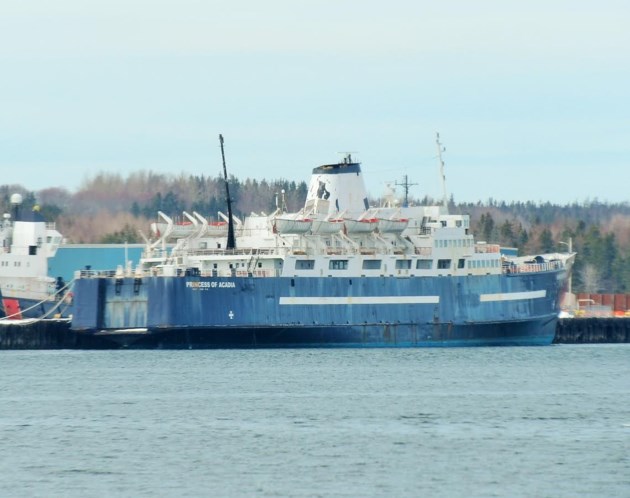
Princess of Acadia to be scrapped:

The federal government has issued a request for proposals to dismantle the old Digby ferry, which it replaced in 2015 with a more modern ship.

princessofacadia3

The old Digby ferry is heading for the scrapyard.

The federal government has issued a request for proposals to demolish the MV Princess of Acadia, which it replaced in 2015 with a more modern ferry.

“The Princess of Acadia shall be disposed of through ship breaking,” say tendering documents. “The contractor will be required to ship break the vessel in an efficient and environmentally responsible manner that is conforming to Canadian laws and the contract.”

Constructed at Saint John Shipyard in 1971 by Canadian Pacific, the 146-metre-long ship was purpose-built for the run between Digby and Saint John, N.B.

“After decades of service the Princess of Acadia has reached the end of its operational life and is now moored in Sydport, N.S., in an unmanned and cold state,” say tendering documents.

The request for proposals defines ship breaking as “the process of systematically scrapping the entire infrastructure of an obsolete vessel by dismantling and disposing or recycling all of its component parts and hazardous materials.”

There is a bidders conference for companies interesting in doing the scrapping work slated for April 5 at the Canadian Coast Guard College in Sydney. Outfits that want to be considered must let Public Works know by Wednesday.

A mandatory site visit for bidders is slated for April 6 at the college.

Only eastern Canadian companies with ship breaking capabilities are eligible for the scrapping work. The tendering documents cite several laws aimed at restricting the movement of hazardous waste for that stipulation.

The scrapping work must start around July 1, when it is estimated the Princess of Acadia will be towed to the yard that wins the contract, and be completed by June 30, 2018.

Bidders must demonstrate their experience in handling and disposing of hazardous materials, say tendering documents.

Bidders also need to provide at least one example of a project that they have completed in the past decade that required proper handling of a minimum of four of the following items: asbestos-containing materials, metals (including lead) in paint, heavy metals in materials (flashing, solder, anodes), polychlorinated biphenyl (PCB) containing materials, mercury in electronic products, ozone depleting substances, petroleum oil and lubricant residue and radioactive materials.

The outfit that wins the work must be prepared to take the Princess of Acadia from its current berth within 30 days of the contract award, say tendering documents.

The request for proposals defines ship breaking as “the process of systematically scrapping the entire infrastructure of an obsolete vessel by dismantling and disposing or recycling all of its component parts and hazardous materials.”

There is a bidders conference for companies interesting in doing the scrapping work slated for April 5 at the Canadian Coast Guard College in Sydney. Outfits that want to be considered must let Public Works know by Wednesday.

A mandatory site visit for bidders is slated for April 6 at the college.

Only eastern Canadian companies with ship breaking capabilities are eligible for the scrapping work. The tendering documents cite several laws aimed at restricting the movement of hazardous waste for that stipulation.

The scrapping work must start around July 1, when it is estimated the Princess of Acadia will be towed to the yard that wins the contract, and be completed by June 30, 2018.

Bidders must demonstrate their experience in handling and disposing of hazardous materials, say tendering documents.

Bidders also need to provide at least one example of a project that they have completed in the past decade that required proper handling of a minimum of four of the following items: asbestos-containing materials, metals (including lead) in paint, heavy metals in materials (flashing, solder, anodes), polychlorinated biphenyl (PCB) containing materials, mercury in electronic products, ozone depleting substances, petroleum oil and lubricant residue and radioactive materials.

The outfit that wins the work must be prepared to take the Princess of Acadia from its current berth within 30 days of the contract award, say tendering documents.

Source: local xpress.
https://www.localxpress.ca/local-news/princess-of-acadia-to-be-scrapped-573608

26 March 2017

Could two more navy vessels be heading our way?

qa-25032017-preserver.jpg

LIVERPOOL - The federal government has issued two new public tenders for the ship breaking and disposal of former navy ships – and these ones are close by.

The former HMCS Preserver and the CFAV Quest are located in the Halifax dockyard.

R.J. MacIsaac Ltd. of Antigonish has set up a shipbreaking yard in Liverpool.

So far, the company has been awarded the tenders for the last three naval vessels to be recycled.

The former Protecteur, Iroquois, and Algonquin  were taken to Liverpool from British Columbia as part of a contract worth about $50 million.

According the federal government’s tender document, the Department of National Defence has a requirement dispose of the former HMCS Preserver, a Protecteur-class auxiliary oil replenishment ship, and the former CFAV QUEST, an Auxiliary General Oceanographic Research/Oceanographic Research Ship.

The contractor will be required to prepare the ships for transfer, transfer each to the approved sites, demilitarize the controlled goods, return any museum material, and subsequently dismantle, dispose and recycle the vessels.

The tender will close on April 26.

According to the document, work must be completed on both vessels within 18 months of the contract being awarded. 

R.J. MacIsaac has not commented  on whether it plans to bid on the vessels.

Source: the advance. 25 March 2017